Top Online Healthcare Courses In California
Top Online Healthcare Courses In California
The healthcare industry is one of the fastest-growing career fields in the United States. California has one of the largest healthcare systems in the country, creating thousands of new jobs every year for trained professionals.
If you want to begin a healthcare career or improve your skills, online healthcare courses can be an excellent choice. They offer flexible schedules, affordable tuition, and the ability to study from home while balancing work or family responsibilities.
In this guide, you’ll learn about the top online healthcare courses in California, what each program covers, expected costs, career opportunities, salary potential, and how to choose the right course for your goals.

Why Choose an Online Healthcare Course?
Online healthcare education has become more popular because it provides flexibility without sacrificing quality. Many accredited colleges and healthcare organizations now offer online learning platforms combined with practical clinical experience when required.
Benefits include:
- Study from anywhere in California
- Flexible class schedules
- Lower transportation and living costs
- Self-paced learning options
- Career-focused training
- Access to experienced instructors
- Preparation for industry certifications
Whether you’re a recent high school graduate or changing careers, online learning allows you to build valuable healthcare skills at your own pace.
What Makes a Great Online Healthcare Course?
Before enrolling, consider these important factors.
Accreditation
- Choose programs offered by accredited colleges or recognized healthcare organizations. Accreditation ensures the education meets quality standards and may be required for certification or employment.
Industry Certification
- Many healthcare jobs require certification after completing training. Select programs that prepare you for recognized certification exams whenever applicable.
Clinical Training
- Some healthcare careers require hands-on clinical practice. Fully online coursework may still include local internships or clinical placements.
Career Support
Good programs often include:
- Resume assistance
- Career coaching
- Interview preparation
- Job placement support
- Networking opportunities
Top Online Healthcare Courses In California
Below are some of the most popular online healthcare education options available to students in California.
1. Medical Billing and Coding
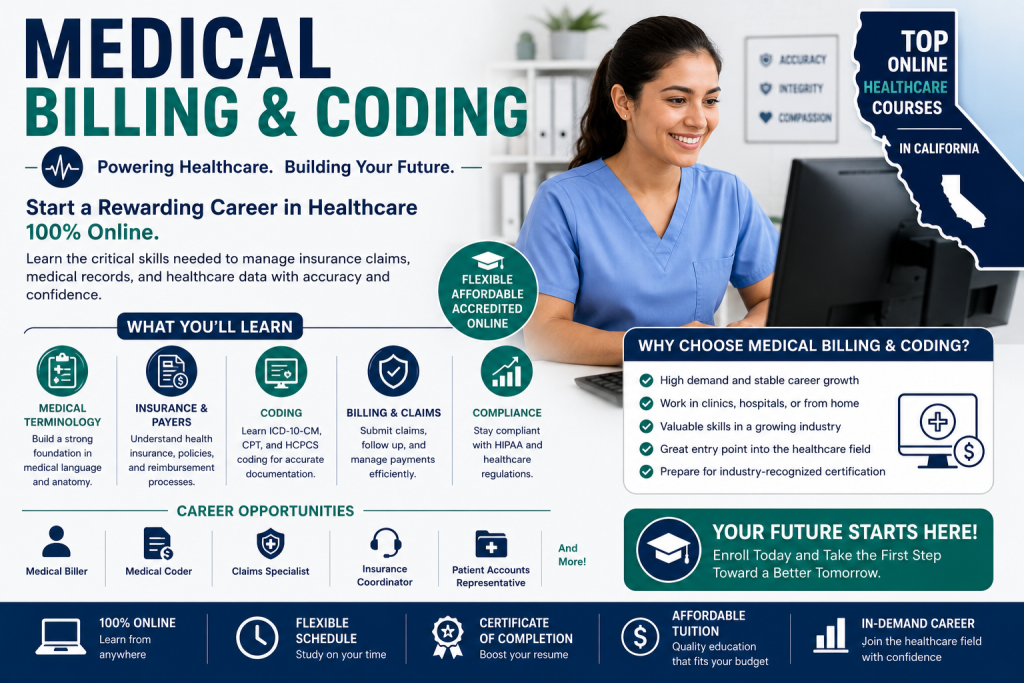
Medical billing and coding professionals convert medical records into standardized codes used by insurance companies and healthcare providers.
You’ll Learn
- Medical terminology
- ICD coding
- CPT coding
- Insurance billing
- Electronic Health Records (EHR)
Best For
- Beginners
- Career changers
- Administrative healthcare careers
Average Completion Time
6–12 months
Career Opportunities
- Medical Billing Specialist
- Medical Coder
- Revenue Cycle Specialist
- Insurance Claims Processor
2. Healthcare Administration
Healthcare administrators manage hospitals, clinics, nursing homes, and healthcare organizations.
Topics Covered
- Healthcare management
- Leadership
- Healthcare law
- Finance
- Human resources
- Quality improvement
Best For
Students interested in management instead of direct patient care.
Career Opportunities
- Healthcare Administrator
- Clinic Manager
- Hospital Department Manager
- Medical Office Director
3. Medical Assistant Programs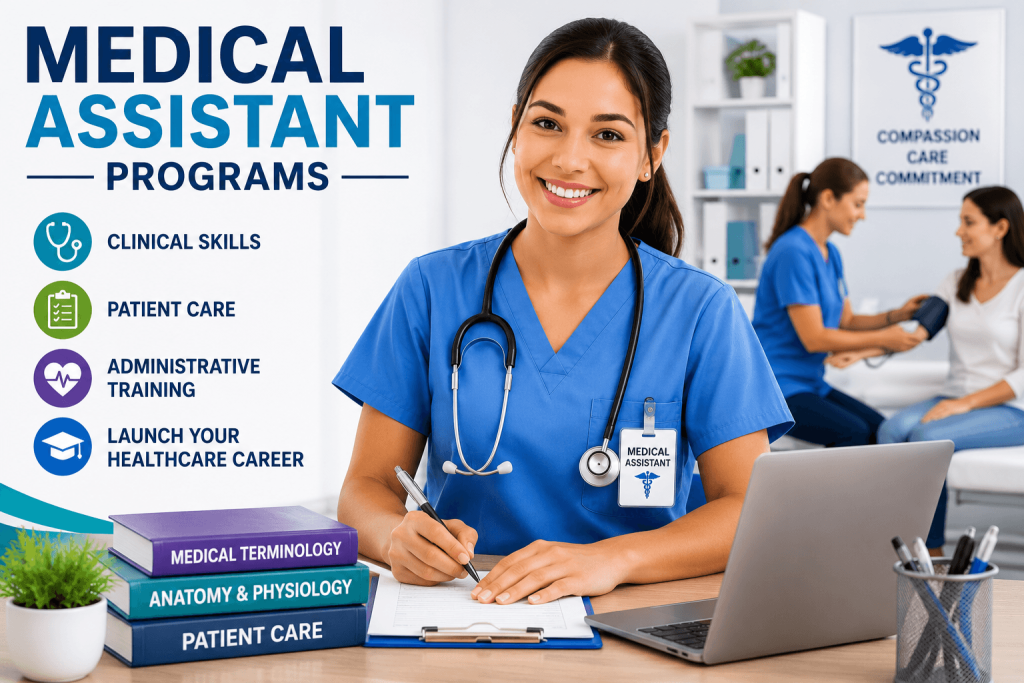
Medical assistants support doctors and nurses by handling both administrative and clinical tasks.
Course topics include:
- Patient care
- Vital signs
- Medical records
- Scheduling
- Infection control
- Laboratory basics
Many online programs combine virtual coursework with local clinical experience.
4. Pharmacy Technician Training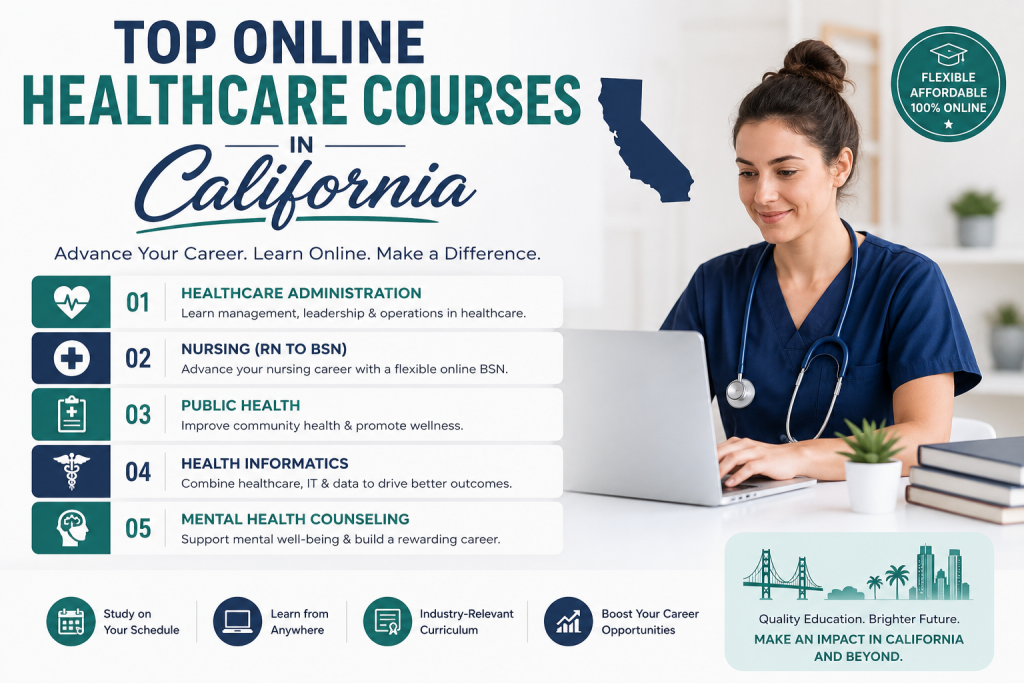
Pharmacy technicians work alongside licensed pharmacists to prepare medications and assist customers.
Students study:
- Pharmacology basics
- Prescription processing
- Drug safety
- Medical calculations
- Pharmacy law
This course prepares students for retail pharmacies, hospitals, and specialty clinics.
5. Health Information Management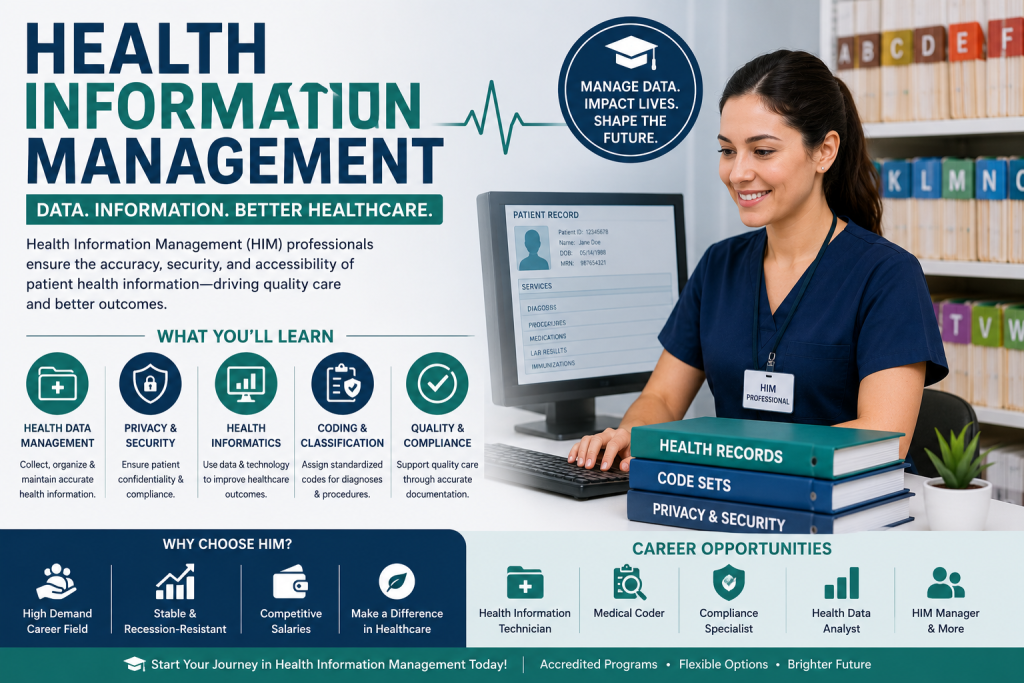
Healthcare organizations generate large amounts of patient data. Health information specialists organize, protect, and manage this information.
Students learn:
- Electronic health records
- Data privacy
- Healthcare compliance
- Medical coding
- Information systems
Demand continues to grow as healthcare becomes more digital.
6. Public Health Certificate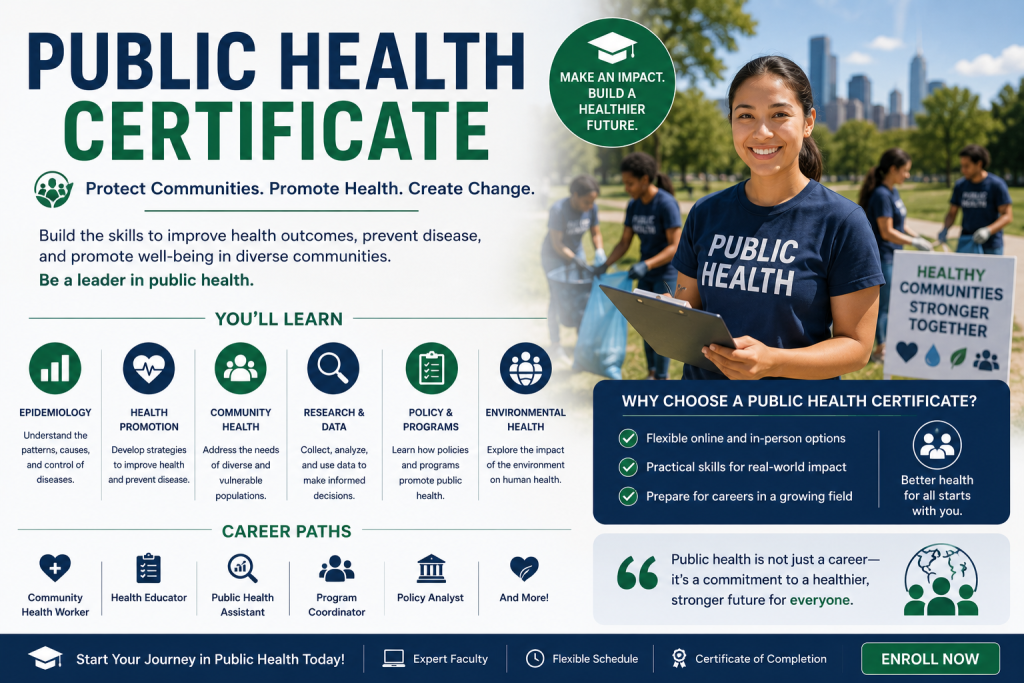
Public health focuses on improving commnity health rather than treating individual patients.
Topics include:
- Disease prevention
- Community health
- Health education
- Epidemiology
- Nutrition
- Environmental health
Graduates often work with government agencies, nonprofits, schools, and community organizations.
7. Certified Nursing Assistant (CNA)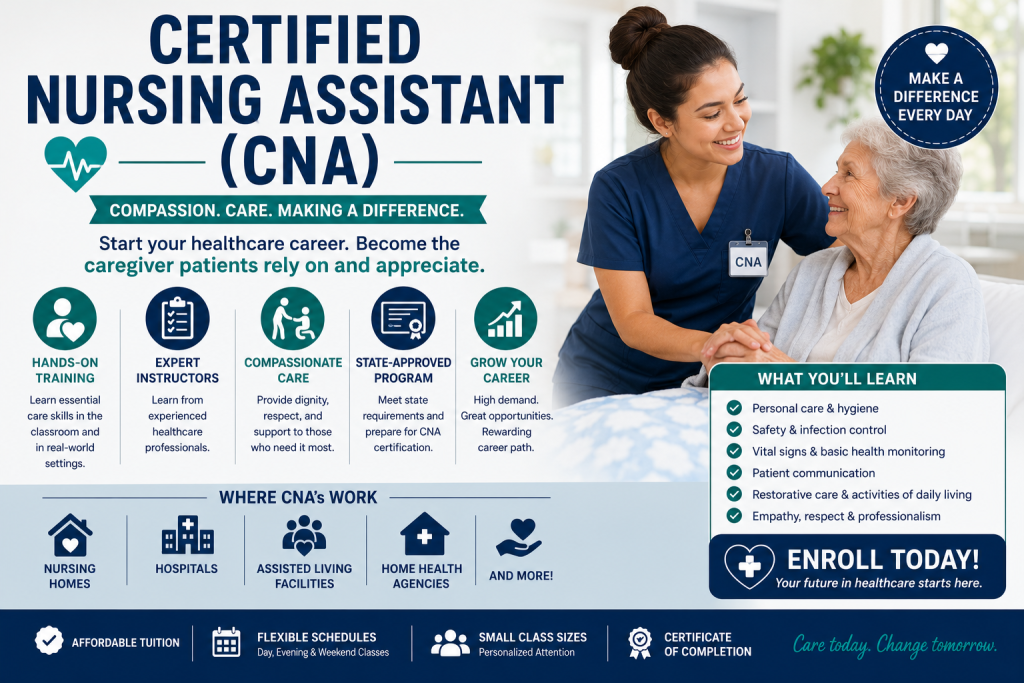
Although clinical training must be completed in person, many California programs now deliver classroom instruction online.
Students learn:
- Basic nursing care
- Patient hygiene
- Infection prevention
- Emergency response
- Patient communication
CNAs work in hospitals, nursing homes, rehabilitation centers, and home healthcare agencies.
8. Medical Office Administration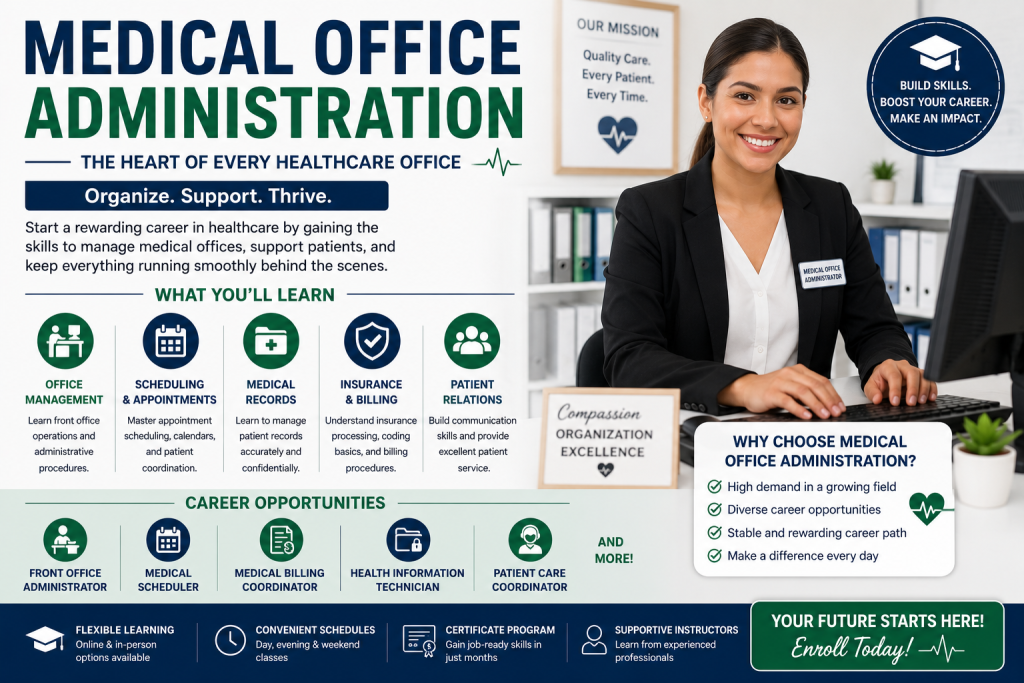
Medical office administrators keep healthcare facilities running smoothly.
Coursework includes:
- Office software
- Medical scheduling
- Patient communication
- Insurance processing
- Electronic records
- Healthcare regulations
This career combines customer service with healthcare administration.
Comparing Popular Healthcare Courses
| Course | Duration | Beginner Friendly | Clinical Training |
| Medical Billing & Coding | 6–12 Months | Yes | No |
| Medical Assistant | 9–18 Months | Yes | Yes |
| Pharmacy Technician | 6–12 Months | Yes | Sometimes |
| Healthcare Administration | 1–4 Years | Yes | No |
| Public Health | 6 Months–2 Years | Yes | Sometimes |
| Health Information Management | 1–4 Years | Moderate | No |
| CNA | 4–12 Weeks | Yes | Yes |
| Medical Office Administration | 6–12 Months | Yes | No |
How to Choose the Right Healthcare Course
Choosing the best program depends on your goals, budget, and the amount of time you can dedicate to learning.
Ask yourself:
- Do I want to work directly with patients?
- Am I interested in healthcare management?
- How quickly do I want to start working?
- Do I need a fully online program?
- Is certification required for my chosen career?
- What is my education budget?
Making a list of your priorities can help narrow your options and prevent you from enrolling in a course that doesn’t match your long-term career plans.
Best Colleges and Online Providers in California
Many colleges and online learning providers offer healthcare courses for California students. Always check that the program is accredited and, if needed, approved by the appropriate licensing or certification body.
| Institution | Popular Healthcare Programs | Online Availability |
| University of California System | Public Health, Healthcare Leadership | Fully Online & Hybrid |
| California State University (CSU) | Healthcare Administration, Public Health | Hybrid & Online |
| Southern New Hampshire University (SNHU) | Healthcare Administration | Fully Online |
| Purdue Global | Medical Billing, Health Sciences | Fully Online |
| American Public University | Public Health, Health Management | Fully Online |
| Coursera | Healthcare Certificates | Fully Online |
| edX | Health Science Courses | Fully Online |
| Udemy | Healthcare Skills Courses | Self-Paced |
Tip: Short online certificates from learning platforms can help build skills, but they may not replace accredited college programs or certifications required for regulated healthcare jobs.
How Much Do Online Healthcare Courses Cost?
Costs vary depending on the school, course length, and credential.
| Program Type | Estimated Cost |
| Online Certificate | $300–$5,000 |
| Diploma Program | $2,000–$12,000 |
| Associate Degree | $6,000–$20,000 |
| Bachelor’s Degree | $20,000–$60,000+ |
| Master’s Degree | $15,000–$70,000+ |
Additional costs may include:
- Textbooks
- Technology fees
- Certification exams
- Clinical uniforms
- Background checks
- Immunizations
- Licensing fees
Admission Requirements
Many beginner-friendly healthcare courses have simple admission requirements.
Typical requirements include:
- High school diploma or GED
- Government-issued identification
- Computer with internet access
- English language proficiency
- Application form
Programs involving clinical work may also require:
- Immunization records
- Drug screening
- CPR certification
- Background check
- Health clearance
Can You Complete Healthcare Training Fully Online?
This depends on the career.
Mostly Online Careers
These programs can often be completed almost entirely online:
- Medical Billing and Coding
- Healthcare Administration
- Health Information Management
- Public Health
- Medical Office Administration
Programs Requiring Clinical Experience
Some healthcare careers require hands-on patient care.
Examples include:
- Medical Assistant
- Certified Nursing Assistant (CNA)
- Pharmacy Technician
- Nursing
- Radiologic Technology
- Dental Assisting
These programs usually combine online classes with in-person labs or clinical placements.
Career Opportunities After Completing a Healthcare Course
Healthcare is one of the most stable industries in the United States. Graduates may find employment in:
- Hospitals
- Physician offices
- Outpatient clinics
- Nursing homes
- Rehabilitation centers
- Insurance companies
- Government agencies
- Public health organizations
- Medical laboratories
- Telehealth companies
Because California has a large and aging population, demand for healthcare workers continues to grow.
Actual salaries depend on education, certifications, experience, employer, and location.
| Career | Typical Annual Salary Range |
| Medical Billing Specialist | $45,000–$65,000 |
| Medical Coder | $50,000–$75,000 |
| Pharmacy Technician | $45,000–$70,000 |
| Medical Assistant | $42,000–$65,000 |
| Healthcare Administrator | $70,000–$130,000+ |
| Health Information Technician | $55,000–$85,000 |
| Public Health Specialist | $60,000–$100,000+ |
| Medical Office Manager | $55,000–$90,000 |
Specialized certifications and several years of experience can increase earning potential.
Certifications That Can Improve Your Career
Many employers value nationally recognized certifications.
Common certifications include:
- Certified Professional Coder (CPC)
- Certified Coding Associate (CCA)
- Certified Billing and Coding Specialist (CBCS)
- Certified Medical Administrative Assistant (CMAA)
- Pharmacy Technician Certification (PTCB)
- Registered Health Information Technician (RHIT)
Before enrolling, check whether your course prepares you for the certification exam you plan to take.
Skills You’ll Develop
Healthcare courses teach both technical and workplace skills.
Technical Skills
- Medical terminology
- Healthcare documentation
- Insurance billing
- Electronic Health Records (EHR)
- Medical coding
- Patient scheduling
- Healthcare compliance
- Infection prevention
Soft Skills
- Communication
- Teamwork
- Critical thinking
- Organization
- Time management
- Professional ethics
- Customer service
- Attention to detail
These skills are valuable across many healthcare settings.
Benefits of Studying Online
Online healthcare education offers several advantages.
Flexible Schedule
Study during evenings or weekends while working full-time.
Lower Costs
Save money on commuting, parking, and campus housing.
Self-Paced Learning
Many certificate programs allow students to learn at their own speed.
Better Work-Life Balance
Parents and working professionals often find online learning easier to manage.
Possible Challenges
Online learning isn’t perfect.
You may face:
- Staying motivated without a classroom
- Managing your study schedule
- Completing clinical requirements
- Limited face-to-face interaction
- Technical issues
Creating a weekly study routine can help overcome these challenges.
Common Mistakes to Avoid
Before enrolling, avoid these common mistakes.
Choosing an Unaccredited Program
Always verify accreditation before paying tuition.
Ignoring Certification Requirements
Some jobs require specific certifications before employers will hire you.
Looking Only at Tuition
Consider additional expenses such as books, licensing exams, and clinical fees.
Not Researching Career Outcomes
Check graduation rates, certification pass rates, and career services if available.
Skipping Financial Aid Options
Many students qualify for grants, scholarships, payment plans, or employer tuition assistance.
Tips for Success in an Online Healthcare Program
- Create a dedicated study space.
- Follow a weekly schedule.
- Participate in discussion forums.
- Ask instructors questions when needed.
- Practice with real-world examples.
- Complete assignments on time.
- Prepare early for certification exams.
- Build a professional LinkedIn profile.
- Network with classmates and instructors.
- Continue learning after graduation.
These habits can improve both your academic performance and your career readiness.
Frequently Asked Questions (FAQs)
- What is the best online healthcare course in California?
The best course depends on your career goals. If you want to work in healthcare administration, consider a Healthcare Administration program. If you’re looking for a faster entry into the field, Medical Billing and Coding, Pharmacy Technician, or Medical Office Administration are excellent options.
- Can I complete a healthcare course entirely online?
Some healthcare courses, such as Healthcare Administration, Public Health, Medical Billing and Coding, and Health Information Management, can often be completed fully online. However, careers involving direct patient care, like Medical Assistant or Certified Nursing Assistant (CNA), usually require in-person clinical training.
- How long does it take to finish an online healthcare course?
Program lengths vary:
- Short certificate programs: 3–12 months
- Diploma programs: 6–18 months
- Associate degrees: About 2 years
- Bachelor’s degrees: About 4 years
- Master’s degrees: 1–2 years
Choose a program that fits your schedule and career goals.
- Are online healthcare courses respected by employers?
Yes. Employers generally value graduates from accredited institutions. They also appreciate candidates who have completed relevant certifications and gained practical experience.
- What healthcare career pays the most?
Leadership roles such as Healthcare Administrator or Health Services Manager often offer the highest salaries. Advanced clinical professions, including Registered Nurses and Physician Assistants, can also earn competitive incomes but require additional education and licensing.
- Is financial aid available?
Many accredited colleges offer:
- Federal financial aid
- State grants
- Scholarships
- Employer tuition assistance
- Monthly payment plans
Check with your chosen institution to learn about available funding options.
- Can I work while studying online?
Yes. One of the biggest advantages of online learning is flexibility. Many students successfully balance full-time jobs, family responsibilities, and their coursework.
- What computer skills do I need?
Most programs require only basic computer skills, including:
- Sending emails
- Using word processing software
- Uploading assignments
- Participating in video classes
- Accessing online learning platforms
- How do I know if a healthcare program is accredited?
Visit the institution’s official website and review its accreditation information. You can also check recognized accrediting agencies to verify the program’s status before enrolling.
- Which healthcare course is best for beginners?
If you’re new to healthcare, consider one of these beginner-friendly programs:
- Medical Billing and Coding
- Medical Office Administration
- Pharmacy Technician
- Medical Assistant
- Public Health Certificate
These programs generally have fewer prerequisites and can lead to entry-level positions.
Checklist Before You Enroll
Use this checklist to compare different programs before making a decision.
✅ Is the program accredited?
✅ Does it prepare you for certification exams?
✅ Are tuition and fees clearly explained?
✅ Are clinical placements provided if required?
✅ Is the schedule flexible enough for your lifestyle?
✅ Does the school offer career services?
✅ What are the graduation and job placement rates?
✅ Are instructors experienced healthcare professionals?
Taking time to compare programs can save money and help you choose a course that supports your long-term goals.
Who Should Take an Online Healthcare Course?
Online healthcare courses are ideal for:
- High school graduates exploring healthcare careers
- Adults changing careers
- Healthcare professionals seeking promotions
- Military veterans transitioning to civilian employment
- Parents who need flexible study schedules
- Working professionals looking to upskill
- Students interested in remote or administrative healthcare roles
No matter your background, there is likely a healthcare program that fits your experience and career objectives.
Healthcare Career Trends in California
California continues to experience strong demand for qualified healthcare workers due to:
- An aging population
- Growth in telehealth services
- Increased use of electronic health records (EHR)
- Expansion of outpatient and community healthcare
- Ongoing need for skilled administrative and support staff
As technology evolves, healthcare professionals with digital skills, knowledge of healthcare software, and recognized certifications may have an advantage in the job market.
Final Tips for Choosing the Right Program
Before enrolling, take time to compare multiple schools. Look beyond marketing claims and focus on the quality of education, accreditation, support services, and career outcomes.
Consider speaking with admissions advisors, reading student reviews, and understanding all costs involved before making your final decision.
The right course should match your career goals, learning style, budget, and schedule.
Suggested Internal Links
Suggested internal link: Best Medical Billing and Coding Programs → Complete Guide to Medical Billing and Coding Schools
Suggested internal link: Healthcare Administration Career Guide → How to Become a Healthcare Administrator
Suggested internal link: Online Public Health Degrees → Best Public Health Programs in the USA
Suggested internal link: Medical Assistant Certification Guide → How to Become a Certified Medical Assistant
Suggested internal link: Highest Paying Healthcare Careers → Top Healthcare Jobs in the United States
Recommended External Resources
To verify accreditation, certification requirements, and career information, consult official sources such as:
- S. Bureau of Labor Statistics (BLS)
- California Department of Public Health (CDPH)
- California Community Colleges
- American Academy of Professional Coders (AAPC)
- American Health Information Management Association (AHIMA)
- Pharmacy Technician Certification Board (PTCB)
These organizations provide current information on career outlooks, licensing, and professional certifications.
Choosing the Top Online Healthcare Courses In California is an important step toward building a rewarding and stable career. Whether you want to work in medical billing, healthcare administration, public health, pharmacy, or patient care, online programs make it easier than ever to gain valuable skills while balancing your personal and professional life.
Before enrolling, compare accredited programs, review certification requirements, understand the total cost, and think about your long-term career goals. With the right training and dedication, you can prepare for a meaningful career in one of the fastest-growing industries in the United States.